



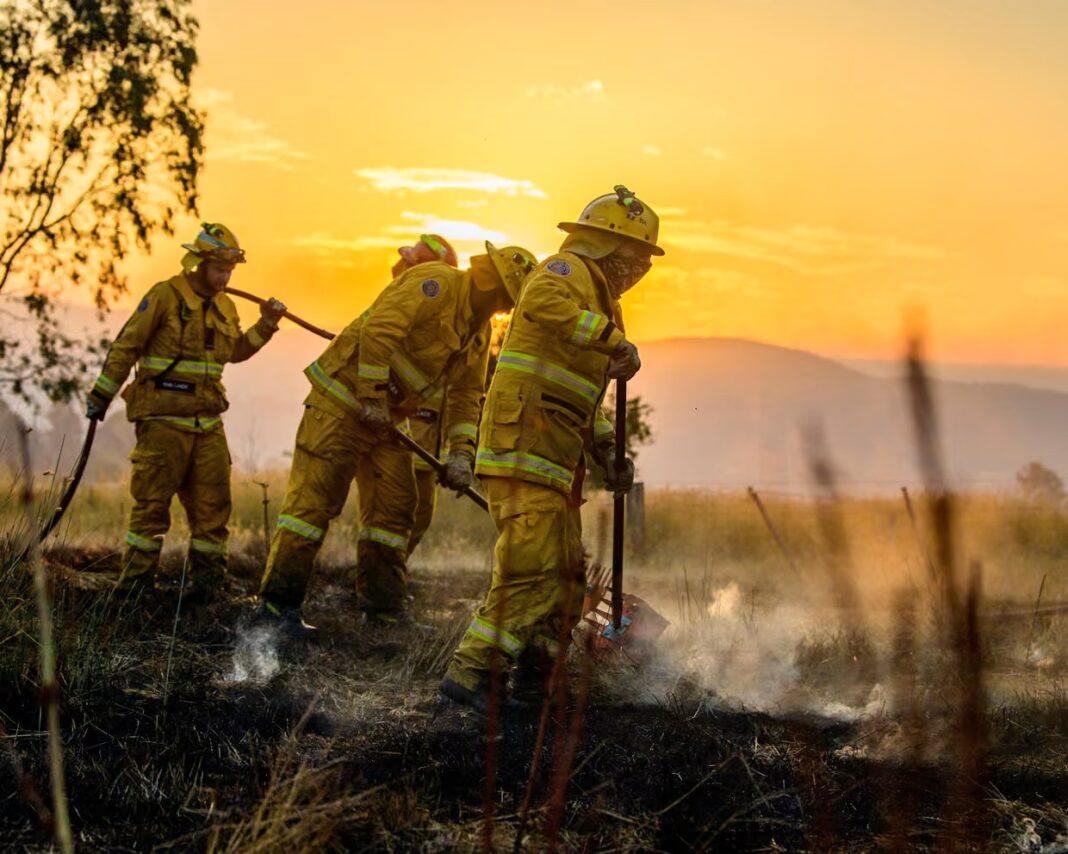
Human-driven global heating made the intense heatwave that scorched large parts of Australia in early January five times more likely, a new scientific analysis has found.
The heatwave was the most severe since the devastating 2019–20 Black Summer, pushing temperatures above 40°C in Melbourne and Sydney, with even harsher extremes across regional Victoria and New South Wales. Western Australia, South Australia and Tasmania were also gripped by extreme heat.
In Victoria, the searing conditions set the stage for bushfires that burned through more than 400,000 hectares and destroyed nearly 900 buildings.
According to a report by World Weather Attribution (WWA), the influence of greenhouse gas emissions far outweighed the cooling effect of a weak La Niña, which typically brings milder conditions to much of mainland Australia. The analysis estimates that climate change increased temperatures during the event by around 1.6°C, while La Niña reduced maximum temperatures by just 0.3–0.5°C.
“There was definitely a signal of human-induced climate change behind this event,” said Professor Sarah Perkins-Kirkpatrick, a climate scientist at the Australian National University and a co-author of the report.
Heatwaves—defined as three consecutive days of unusually high maximum temperatures—are already Australia’s deadliest natural hazard, causing more fatalities than floods, bushfires and cyclones combined. Read More
News Credit: The Guardian
Picture Credit: Michael Currie/Reuters